
Natural Ice and Track Conditions
Every winter is different on natural ice – and that is part of the unique Finland Ice Marathon skating experience.
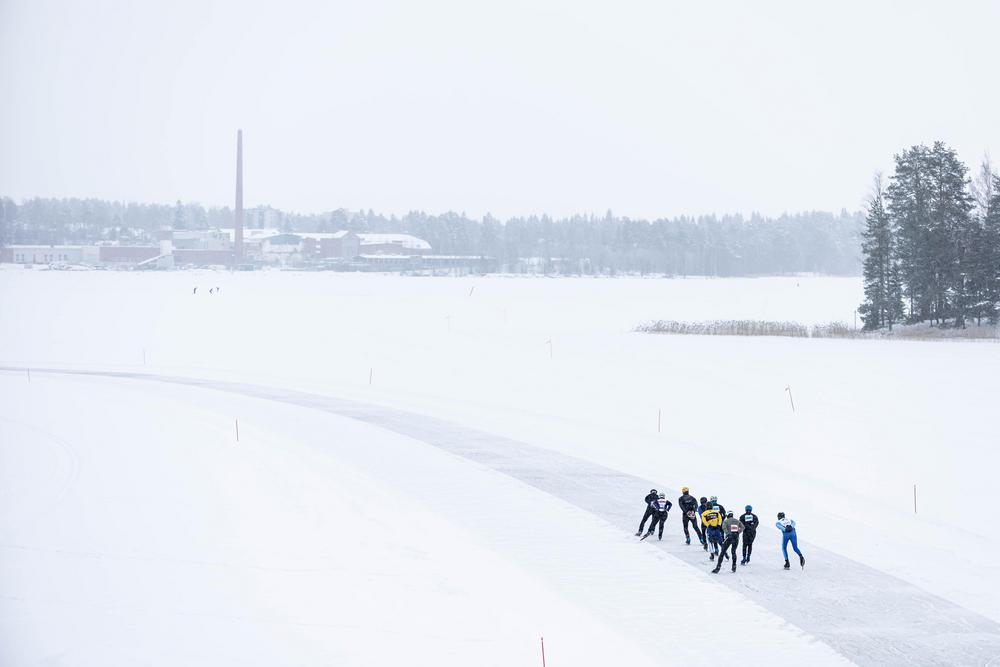
The Finland Ice Marathon track is formed on the natural ice of Lake Kallavesi. This means that the surface is not the same every year. Periods of cold weather, snow, wind and temperature fluctuations all affect the structure, surface and skating conditions of the ice.
Track maintenance begins in December–January. Once the ice has reached sufficient thickness, the track is mechanically maintained to make it as smooth and safe as possible for skating. However, natural ice may contain cracks, grooves and minor irregularities, which maintenance work aims to reduce.
A natural ice track differs from an artificial ice rink or indoor ice. It is a naturally formed surface on a lake, and its characteristics are determined by the weather conditions throughout the winter. The surface, hardness, cracks and possible irregularities can change during the season.
Periods of very cold weather can also cause cracks to form in the ice. Temperature fluctuations, in turn, affect both the surface and the structure of the ice.
The final length of the track and the sections available for skating are determined by the ice and weather conditions.
The track is 6–8 metres wide. During the event, the ice thickness is more than 50 cm.
The aim is to hold the event on a 7.5 km track. Depending on the weather and ice conditions, the track may be shortened, for example to 4 km.
The final track length and the sections used for the event will be confirmed no later than Friday evening before the event.
What does natural ice feel like to skate on?
Skating on natural ice can feel different depending on the conditions. Weather and ice surface conditions directly affect speed, rhythm and how physically demanding the skating feels.
Hard, clear “steel” ice – usually fast and smooth to skate on.
Snow-covered ice – softer and generally slower to skate on.
Slush and softer ice – a softer and more demanding surface.
Cracks and fissures – natural features of lake ice that maintenance work aims to manage and reduce.
Uneven ice – mechanical maintenance smooths the surface, but natural ice is never completely uniform.
Wind – affects ice formation, surface conditions and how cold the weather feels to skaters.
Warm weather and thawing conditions – can soften the ice surface and make skating slower and more physically demanding. Prolonged warm weather can also affect the structure of the ice and the ability to maintain the track.
Snowfall – changes the characteristics of the ice surface and affects the need for track maintenance.
.jpeg)
%20(1).jpeg)
%20(1).jpeg)
%20(1).jpeg)
.png)